Bonsai people tend to get a bit carried away with things. It seems to be in the nature of bonsaists. We end up with too many trees, too many pots, go too hard on a collecting trip and need to take a quick “nappy” (this sounds very specific but nevermind), etc.
We all seem to get there at one point or another, and it seems that we all KEEP getting there over and over.
When taking my trees out of their winter storage for their first peek at spring this year, I realized that there were some trees which I was much more willing to leave outside for an evening that was going to be just below freezing. There were still many that I shuffled back in, but about a third of my collection were left out on that night.
This made me realize that there were some trees that I just didn’t care too much about anymore. They are good enough that I wouldn’t just stop watering them, but I don’t personally want them anymore.
I got to this point because I am a strong believer that for a beginner to truly succeed and learn in bonsai, we must have many trees. In particular, we must have many of the same species. This allows us to see changes in a particular tree and to diagnose any issues such as disease or pests. I believe that I’m ready to move on past this way of thinking at this point though.
I attribute this change of thinking to my growing experience and confidence in my horticultural abilities. I no longer need 5 junipers in order to notice a pest issue in one of my more “important” junipers. I’m confident that I will notice the issue and catch it before it’s too late.
On this note, I have probably 15 trees that I plan to either sell or donate this year. This way I can focus on the trees that I truly care about.
Along the same lines, I decided to take a trip out to Kris Springer’s Black Dodge Bonsai a few weeks back to work on some collected larches. MARCH IS FOR LARCH and it’s time to upgrade the collection.
These are the types of wild trees that people sometimes are afraid of tackling. They don’t know how to handle these trees, and many times they don’t suit the “typical” bonsai form. There’s two main keys to this type of work. The first is that you MUST work with the tree. You are never going to be able to impose your will on these trees to make them into a “typical” bonsai, nor should you try. Nature has done the hard work for you. The second is that you must know how to work with the particular species that you’re working on.
Art and shape and style do not come naturally for me, but if I stare at a tree for long enough, I can usually make some sense of where the design should go. Many times I have to put the thought down on paper prior to starting the actual work on the tree. Otherwise I’ll get lost in the work.
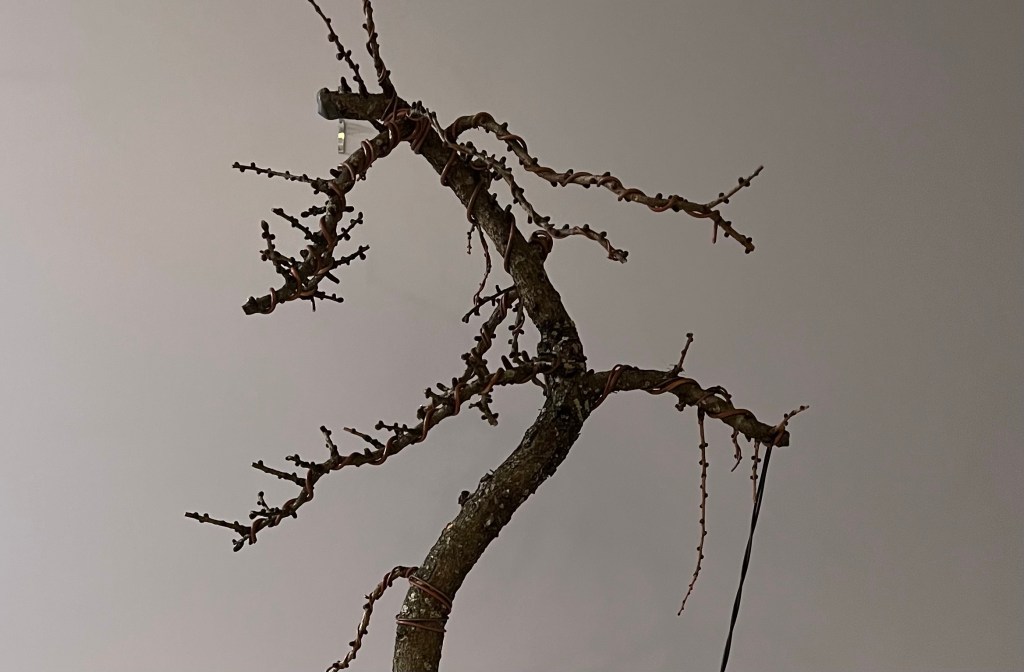
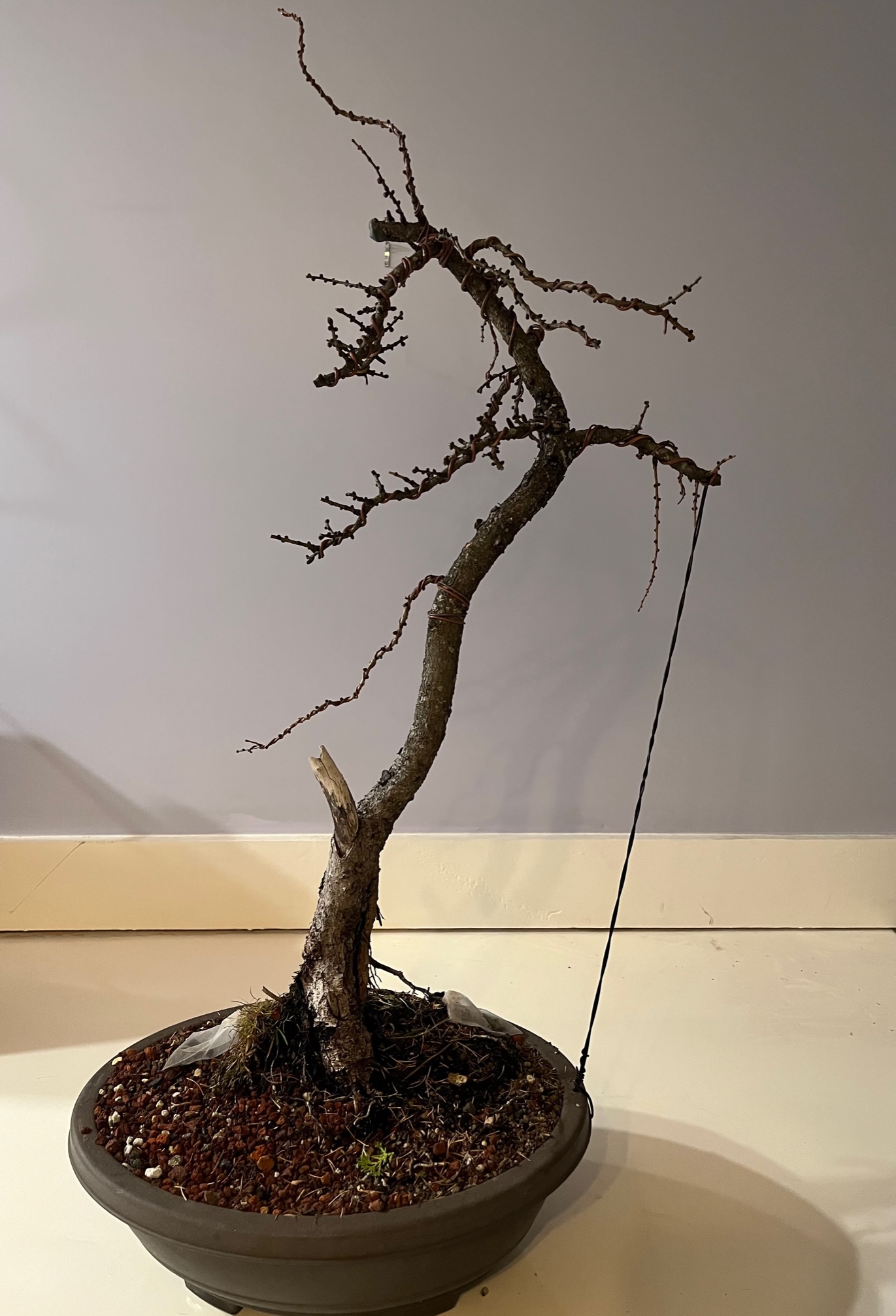
The first tree that we worked on was a gently curving larch. This is the only tree that I had already come up with a pretty firm plan for design.


The second picture shows a technique that I use quite often on trees that I’m not sure how to handle. I will take a picture of the tree, and then draw over the picture where each branch will go. The key is that you can’t add branches, and bends need to be realistic.
If you look at the top half of this tree, it’s almost unrecognizable. It’s not until you look at the bottom half that it becomes very apparent that it’s the same tree.
I consider Kris my main teacher at this point, and although the design on this tree was almost figured out before we started, the techniques and small important details we discussed in detail as we worked.
Larches are an incredibly beautiful tree in part because of the special nuances of how you handle them. Many of the things that you have learned about other species are quite different than when working on a larch. Tips of branches are often wired downwards instead of with a slight lift. Buds are incredibly fragile, especially at certain times of the year. It’s common to “choose” an upward or downward facing bud rather than left or right because you will end up with a very natural looking up/down curvature in the branch this way. All of these details are things that I learned working on these trees.
We continued onto the next specimens.


Very poor “before” shot, but you get the idea if you look hard enough. Went from an untamed spindly looking thing with no cohesion to the spike, to an ancient and beautiful tree. In a few years, this is going to be spectacular.


This was my favorite tree to work on. I don’t think that it’s the “best” out of the lot, but for some reason I just love it. The base is so subtle, and then at about the mid-way point, it descends into an organized chaos. It may end up shorter at some point, but that decision doesn’t need to be made yet. It needs some more wire, it needs some more years, but I still love it right now.
This is really my first step in upgrading my overall collection. I’ve gone from one actually fully designed and significant tree last spring to probably about 7 at this point. There’s about another 4-5 to come within the next few years as well.
I hope that this shows people that once you’re confident enough to keep trees alive long-term, that with some help, and collected trees, you can create something spectacular quite quickly. Buy or collect trunks, and the rest will come with a bit of patience, knowledge, and help.
 Bonsai NH
Leave a comment